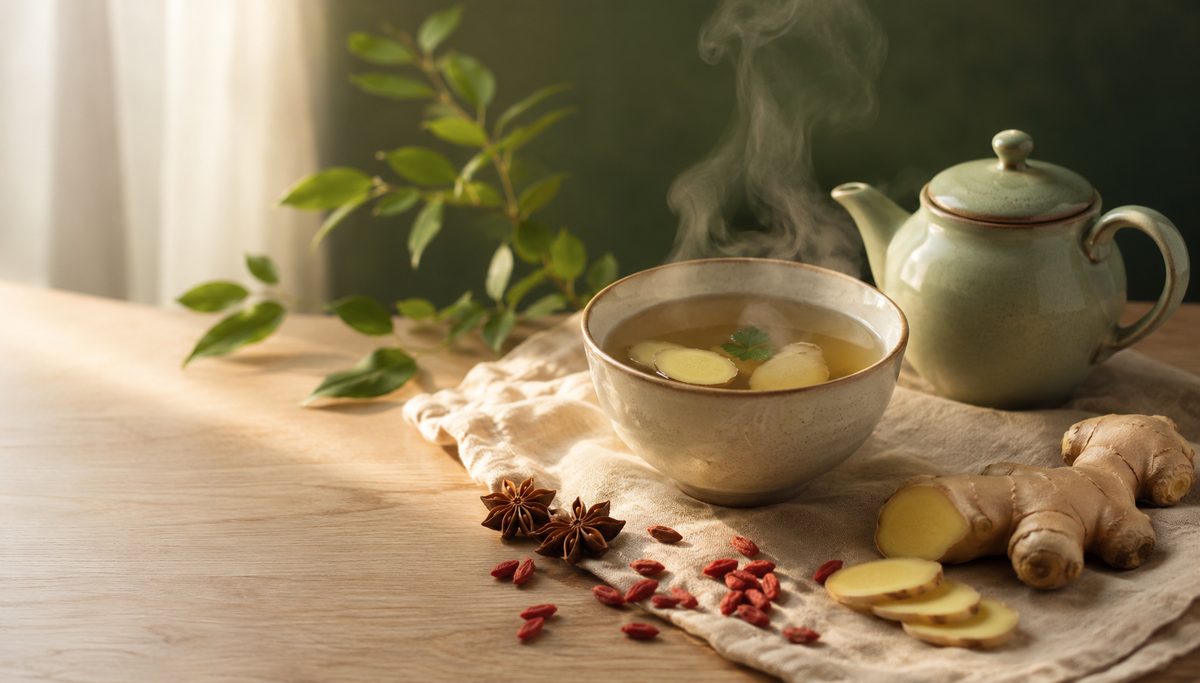
Bloating, heartburn, sluggishness and irregular bowels are often accepted as normal. Traditional Chinese Medicine sees digestion as the foundation of health: when it is strong, the body thrives; when it weakens, illness can follow.
Bloating after meals, sluggishness, heartburn, irregular bowels, feeling tired the moment you sit down to eat — poor digestion is so common that many people assume it is simply normal. Traditional Chinese Medicine takes a different view. For over two thousand years it has placed the digestive system at the very centre of health, teaching that when digestion is strong, the whole body is nourished — and when it falters, problems appear far beyond the gut.
Why digestion sits at the centre of health
In Chinese medicine, the Spleen and Stomach form what is often called the "centre" or "middle burner." Their job is to receive food and drink and transform it into the Qi and Blood that nourish every organ, muscle and thought. Because everything downstream depends on this process, a weak digestion doesn't just cause bloating — it can lead to fatigue, poor concentration, low mood, weak immunity and a run-down feeling that no amount of rest seems to fix.
This is why a practitioner will often ask about your digestion even when you have come for something apparently unrelated. The symptom you notice — the bloating, the reflux, the loose stools — is rarely the whole story. The real question is why the digestive "fire" has become weak, stuck or overheated, and what pattern lies behind it.
"When the centre is strong, a hundred illnesses struggle to take hold. When the centre is weak, they find the door already open."
The most common patterns behind poor digestion
In clinical practice, digestive complaints usually fall into one or more of these patterns:
- Spleen Qi Deficiency — Tiredness (especially after eating), bloating, a heavy feeling in the limbs, poor appetite and loose stools. The foundational pattern, and often the root beneath the others.
- Liver overacting on the Spleen — Stress-driven digestion: bloating and cramping that worsen under pressure, bowel habits that swing between loose and constipated, relief from sighing or passing wind. The pattern most often seen in IBS.
- Stomach Heat — Burning sensations, acid reflux, bad breath, strong hunger and sometimes mouth ulcers. Often linked to rich food, alcohol or eating in a rush.
- Damp accumulation — Heaviness, mental fog, a sluggish and "stuck" feeling, loose or sticky stools, worse in humid weather or after greasy, sweet or dairy-rich meals.
- Cold in the Stomach (Spleen Yang Deficiency) — Discomfort eased by warmth and worsened by cold or raw food, watery stools and a general tendency to feel the cold.
Most people show a combination — very often a weak Spleen underneath, with stress, diet or cold "layered" on top. Identifying the exact mix is what allows treatment to be tailored rather than generic.
What treatment looks like
Acupuncture for digestion works to strengthen the underlying function while easing the immediate symptoms. A central point is ST 36 (Zusanli), below the knee — one of the most researched and widely used points in all of acupuncture for supporting digestion and energy. It is commonly combined with CV 12 (Zhongwan), over the stomach itself, and SP 6 (Sanyinjiao) to support the Spleen. Where stress is a factor, points on the Liver channel such as LV 3 are added; for nausea, PC 6 (Neiguan) on the inner forearm is especially useful.

ST 36 (Zusanli) — a key point for digestion and energy. Location is illustrative; exact placement is verified by your practitioner in clinic.
Herbal medicine is frequently used alongside needling. Classical formulas such as Si Jun Zi Tang (Four Gentlemen Decoction) strengthen a deficient Spleen, Xiao Yao San (Free and Easy Wanderer) addresses the stress-related Liver–Spleen pattern, and Bao He Wan helps clear food stagnation. Each prescription is adapted to the individual rather than the symptom.
There is also a growing body of research in this area: clinical trials in conditions such as functional dyspepsia and irritable bowel syndrome have reported improvements in symptoms and quality of life, often with benefit that lasts beyond the treatment course.
Three things to try between appointments
1. Support ST 36 (Zusanli), the digestive powerhouse. Find it four finger-widths below the lower edge of the kneecap, one finger-width to the outer side of the shinbone — you may feel a slight ache when you press the right spot. Apply firm, circular pressure for 2–3 minutes on each leg once a day. This is one of the oldest self-care points for strengthening digestion and lifting energy.
2. Eat warm, cooked food — go gently on cold and raw. In Chinese medicine the Spleen dislikes cold and damp. Iced drinks, large raw salads, excess dairy and greasy or very sweet foods all make its job harder. Warm, simply cooked meals — soups, stews, porridge, cooked vegetables, a little fresh ginger — take far less effort to transform and are often the single most helpful change people can make.
3. Eat calmly, and at regular times. The Spleen is linked to worry and overthinking, and eating at your desk, in a hurry, or while stressed genuinely impairs digestion. Sit down, chew well, avoid eating late at night, and keep meal times reasonably regular. Before your first consultation, a short food-and-symptom diary — what you ate, when, and how you felt afterwards — is invaluable for accurate diagnosis.
When to seek treatment
If bloating, reflux, irregular bowels or post-meal fatigue have become a regular part of your life — or if you are reaching for antacids more often than you would like — a course of acupuncture and some simple dietary adjustments can make a real difference. Chinese medicine works well alongside conventional care rather than in place of it. That said, certain symptoms always warrant a medical assessment first: unexplained weight loss, difficulty swallowing, persistent vomiting, or any blood in the stool should be checked with your GP without delay.